Open top containers are a practical option for a wide range of applications, making unloading and loading as simple as possible. In this guide, we provide the answer to ‘what is an open top container?’, take a look at the features of this container type and explore the numerous ways these versatile solutions can be used.
What is an Open Top Container?
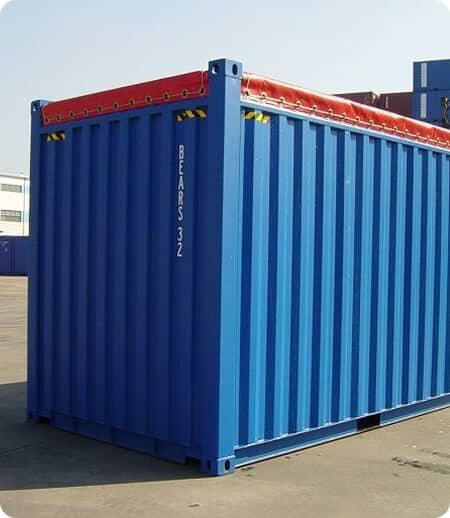
An open top container is, as the name suggests, a container where the typical ‘roof’ is removed, providing immediate access into the interior of the container via cranes or lifting equipment without the need for doors. These containers are an ideal solution for the compact storage of items or for oversized item transportation, where the item fits within the width and depth of a container but exceeds the available height.
Open Top Container Key Features
These open roof containers have several key features that differentiate them from other solutions. These include:
- Removable roofs: Both hard-top and soft roofs, such as a tarpaulin, are available to provide protection for items stored in open top containers.
- Reinforced walls: Instead of doors, the end walls of these containers are reinforced to manage the lateral forces from top-loaded, heavy cargo.
- Crossbars: These removable roof bow supports provide structure under soft roofing where required.
- Rear access: Container doors are typically included for unloading and smaller cargo access.
- Dimensions: These containers are typically available in lengths from 10ft to 40ft, similar to other types of containers.
When Are Open Top Containers Used?
Open top containers have a wide range of unique uses, providing a convenient and practical way to store and move cargo that simply wouldn’t fit into conventional containers. Here are some of the most common uses for this style of container:
- Vehicles and outsized equipment: Forklifts, small boats or mining equipment may exceed height restrictions for standard containers but can be stored safely with an open top.
- Heavy machinery: Turbines, generators, presses and factory components may be too heavy for loading through container doors but can easily be stored through lifting into the container.
- Construction materials and equipment: Scaffolding, concrete components and steel beams can easily be lowered into these containers for safe and reliable storage.
- Cylindrical items: Pipework and materials that are too long for typical container sizes can be stored in open-top containers and protected against the elements with soft roofing.
Open Top Container Size Options
Open top containers are available in a range of sizes to suit your individual requirements. Much like standard containers, these solutions are standard sizes to fit shipping and storage requirements, allowing you to maximise space when combining different container types. These containers are available in 10ft, 20ft and 40ft lengths, allowing you to choose the best solution for your needs.
Benefits of an Open Top Container
Open top containers solve a lot of the challenges that standard containers can’t. Some of the benefits of this container type include:
- Suitability for large and bulky items
- Ability to store tall or oversized items
- Ideal for top-loading with a crane or lifting equipment
- Reduces the space needed to access items inside containers
- Choice of hard or soft roof for further versatility
- A range of sizes to suit your requirements
Planning for Regulations and Safety
Whatever type of container you plan to use for shipping, international transport regulations apply. Open top containers aren’t an exception to this rule and should meet ISO container standards for transportation. You’ll also need to consider other restrictions, such as rules for oversized cargo at ports and terminals and access to your items for inspections and customs.
Lifting an Open Top Shipping Container
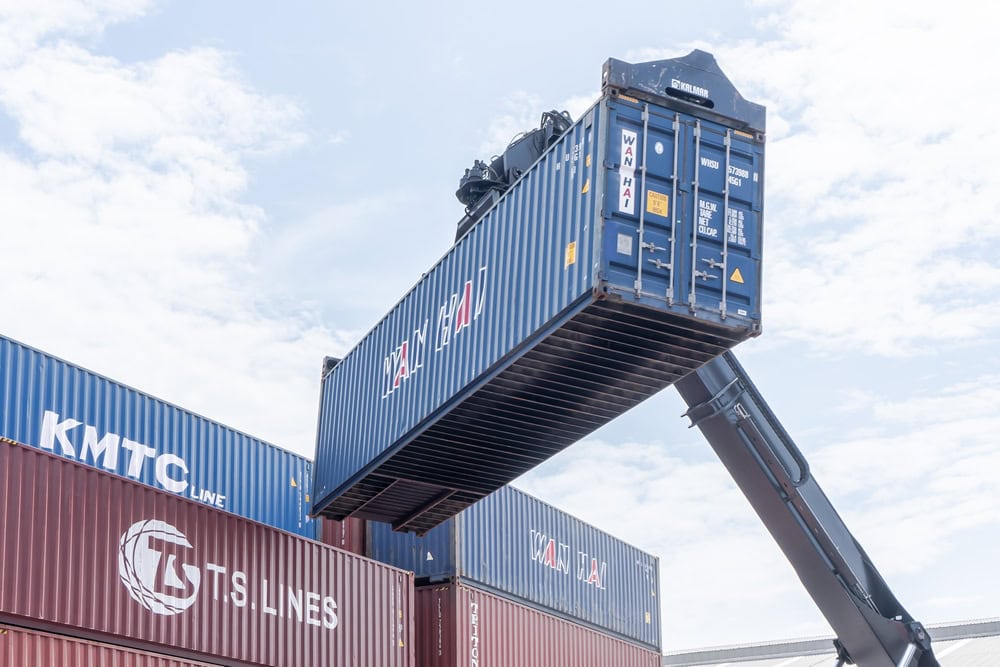
Where possible, open top containers should always be lifted from the bottom corner castings. Using cranes or other lifting gear that lifts from the top is sometimes possible but may damage the soft top of your container. Lifting frames should be used to ensure vertical lift, instead of a single lifting point to prevent container collapse.
Open Top Container vs Flat Rack Container
While an open top container has an open roof, a flat rack container is significantly more open. These containers feature no roof or side walls, making them completely open to the environment. These ‘U-shaped’ containers allow you to load from the front or sides.
While open top containers are often used for tall cargo, flat rack containers tend to be utilised for wide or extremely heavy cargo that isn’t suitable for open top shipping.
Open Top Containers at KH Containers
If you are considering open top containers for your shipping or storage requirements, KH Containers can help. We source and provide a wide range of new and used containers with open tops, alongside side opening and tunnel containers to suit your specific needs.
Contact our team today on 0333 577 3191 or fill out our contact form to get a free quote for open top containers. We’ll pair you with the perfect solution for your container needs.
Knowledge Hub
Related Past Projects and Practical Advice
Browse our blog and peruse our projects for top tips and fresh inspiration. See how we’ve helped businesses just like yours find the ideal solution.